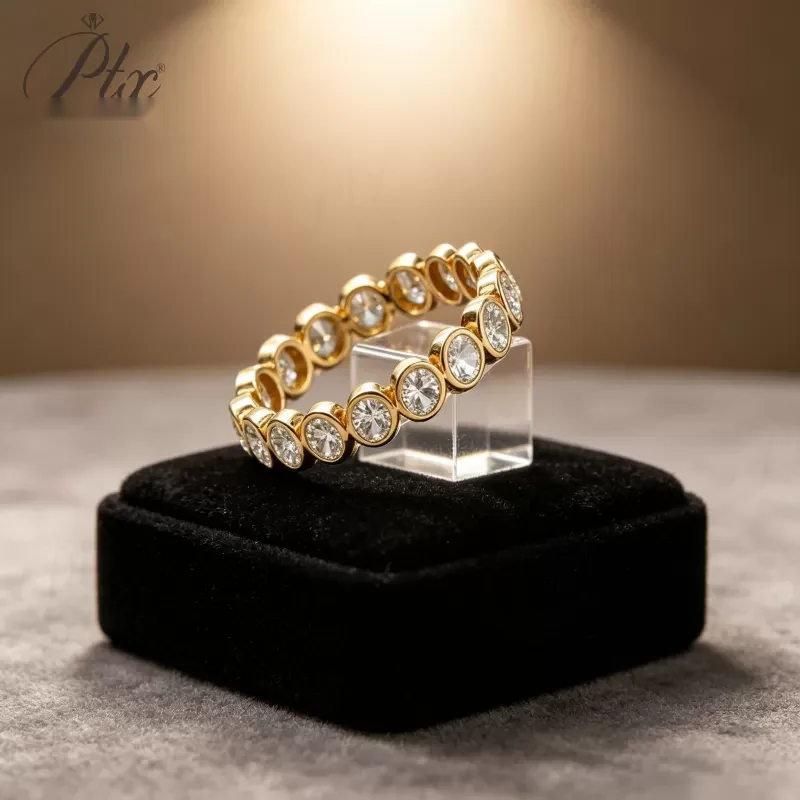
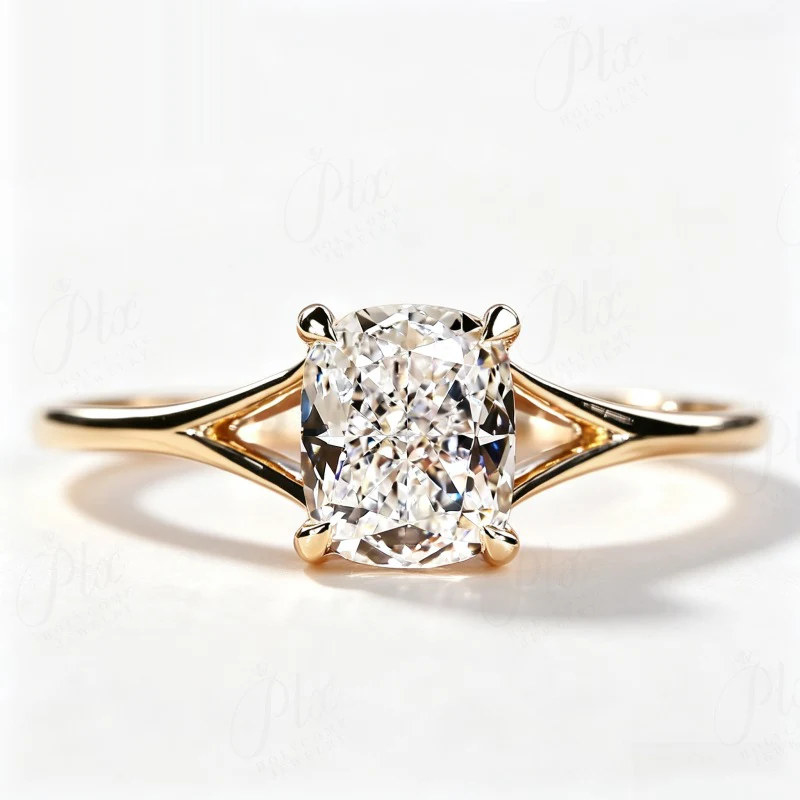
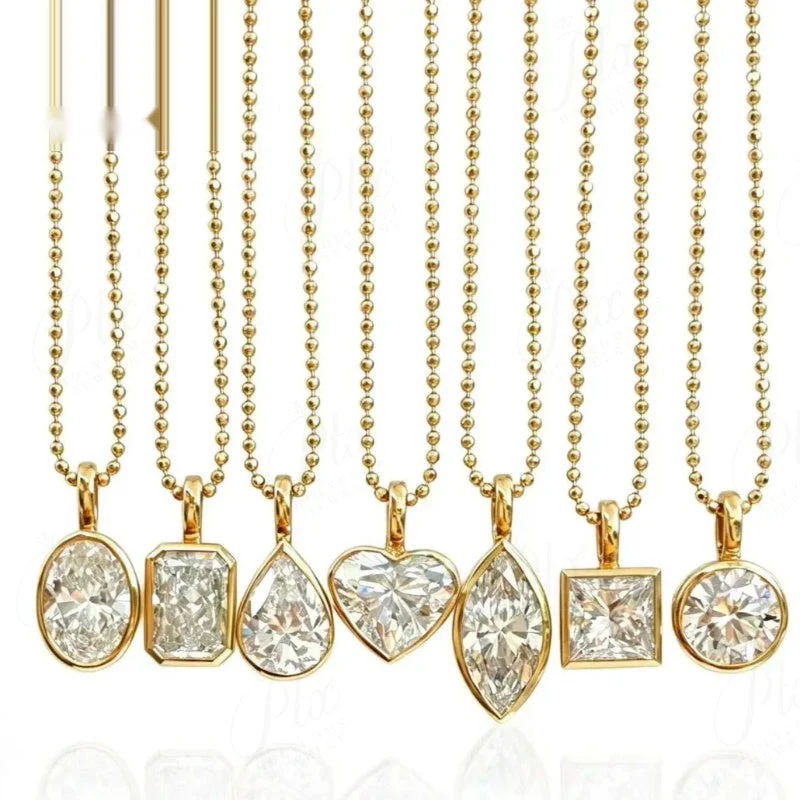
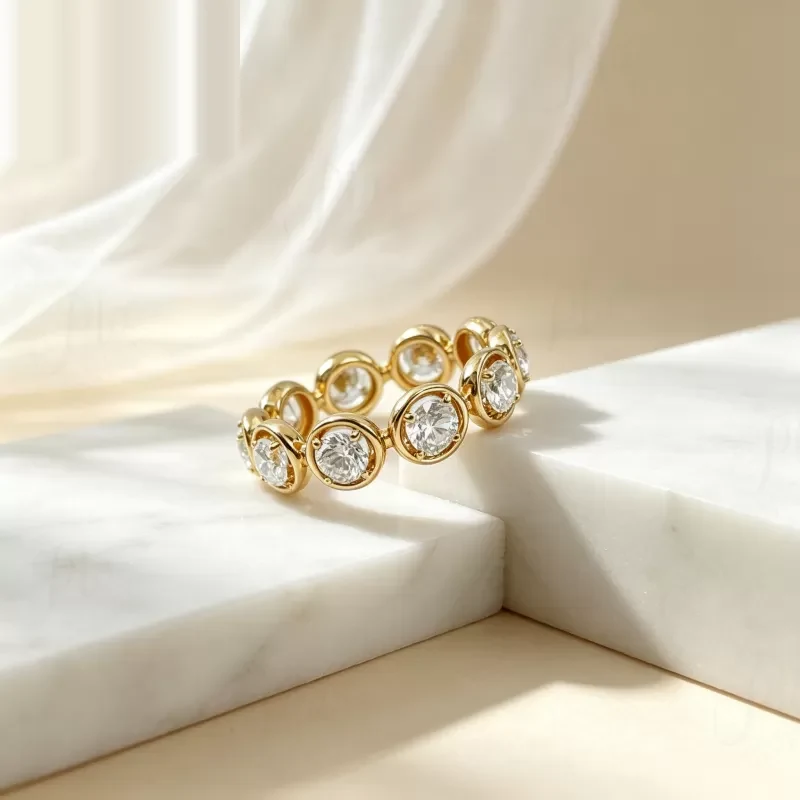
A couple in Copenhagen came into a reseller's store last month asking for an "engagement ring that looks like a 2-carat diamond but costs under $500." The reseller showed them a moissanite solitaire, let them look at it next to a genuine diamond under a loupe, and told them plainly: the moissanite sparkles more, but it will not read as a diamond to a jeweler's tester, and it is not an investment stone. They bought the moissanite. They did not feel tricked. That is the honest sale - and it is the one that does not generate a return six months later.
What the customer actually sees
At arm's length, in everyday light, a well-cut 1-carat equivalent moissanite looks white and brilliant. Most people cannot tell the difference. The trade-off shows up in three places: fire, tester, and resale. Moissanite disperses roughly 2.4 times more fire than diamond, so it actually looks more rainbow-bright under direct light. Some customers love that; others find it too bright. A diamond reads as quiet white brilliance. GIA's 4Cs framework explains diamond color, cut and clarity, and moissanite borrows that language - but the two stones are not graded on the same scale. Tester behavior is the practical difference: a standard diamond tester reads moissanite as diamond because it measures thermal conductivity, but a moissanite-specific tester separates them. This is the detail behind how moissanite reads on a jeweler's tester, and it is what couples should know before they buy.
Price, value and resale honesty
A 1-carat equivalent moissanite solitaire in 14k will cost a reseller roughly $80 to $150 landed, and retail at $350 to $600. A comparable natural diamond solitaire starts at $3,000 and climbs fast. The savings are real. But the resale math is not the same. Moissanite resale value is limited - there is no secondary market like diamond, and the stone is worth what the next customer will pay for the look, not for the material. That is not a reason not to sell it; it is a reason to tell the customer. A couple who buys moissanite for the look and the budget, and understands it is not an investment stone, is a happy customer. A couple who buys it thinking "it's a diamond at a fraction of the price" is a return in waiting.
When moissanite is the right call
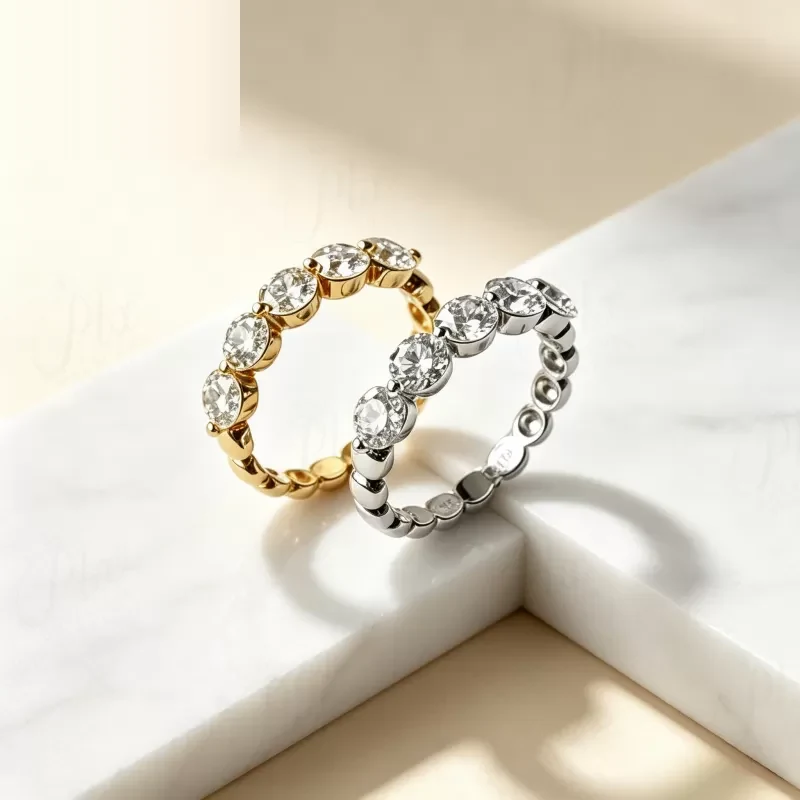
Moissanite suits customers who want a large, white, brilliant center stone on a real budget; who prefer the extra fire; who do not care about diamond provenance or resale; and who want a lab-grown, ethically unambiguous stone. It is also the right call for a second ring, an upgrade band, or a travel ring that the couple does not want to insure at diamond values. Moissanite is Mohs 9.25, so it wears as well as sapphire in daily life - the durability is not the issue. Moissanite's hardness and thermal stability make it a legitimate daily-wear stone, which is why it has become a real engagement option rather than a costume substitute.
How to write the listing honestly
Do not write "looks exactly like a diamond" - that is the line that generates returns. Write "lab-grown moissanite, 1-carat equivalent, more fire than diamond, not a natural diamond." State the mm, the carat equivalent, the metal, and the price. Tell the customer that a jeweler's tester will identify it as moissanite with the right tool. Customers who read that and buy are the ones who keep the ring. Pair the honest copy with the engagement buyer FAQ you already maintain, so the common questions are answered before they ask.
The honest reseller does not sell moissanite as a diamond substitute. They sell it as its own stone: more fire, lower price, not an investment, durable for daily wear. That framing converts the right customer and filters out the wrong one, which is the only way to keep returns low.
Can people tell moissanite from a diamond?
At arm's length, most cannot. A jeweler with the right tester can. Under a loupe, the extra fire is a tell for some customers.
Does moissanite hold its value like diamond?
No. There is no established secondary market for moissanite. It is bought for the look, not as an investment.
Is moissanite durable enough for an engagement ring?
Yes. At Mohs 9.25 it sits near sapphire and wears well in daily life. The prongs, not the stone, are what need periodic checking.
Should I tell customers it is not a diamond?
Yes. Honest labeling lowers returns. Call it lab-grown moissanite, state the fire, and let the customer decide.
HOLYCOME supplies moissanite engagement solitaires with honest spec sheets - mm, carat equivalent, metal and fire described plainly. Stock the best-selling sizes and write the listing around what the stone actually is, and the right customers will self-select.
Frequently Asked Questions
Is moissanite a good diamond alternative for retail buyers?
Yes for price-sensitive customers who want brilliance and hardness. Moissanite ranks 9.25 on the Mohs scale, holds up to daily wear and costs a fraction of a natural diamond of the same size, so it resells fast in bridal and fashion lines.
What is the minimum order for wholesale moissanite?
MOQ starts at 50 pieces per design for stock items. Custom cuts and private-label settings usually start at 100–300 pieces depending on the mold.
Do you provide certificates with moissanite stones?
Yes. Every parcel ships with GRA or IGI documentation listing carat weight, color grade and cut. We recommend passing the certificate to your end customer for trust.
How long does sample and bulk production take?
Samples ship in 3–5 days. Bulk runs take 15–20 days under 500 pieces, and 25–30 days for custom work.