Most retailers stock moissanite rings first, then earrings, and forget bracelets entirely. That is a missed sale. Bracelets are one of the easiest self-purchase categories in fine jewelry: the price point is lower than a solitaire, the style is universal, and customers buy them to stack, not just to mark a milestone. For a wholesale buyer, a small, well-chosen bracelet assortment can lift average transaction value without requiring a huge inventory commitment.
Three bracelet families dominate moissanite wholesale: the tennis bracelet, the bangle or cuff, and the station or by-the-yard style. Each has a different customer, a different price point, and a different wear pattern. Buying all three indiscriminately is how you end up with dead stock. Buying each on purpose is how you build a category that reorders.
The moissanite tennis bracelet
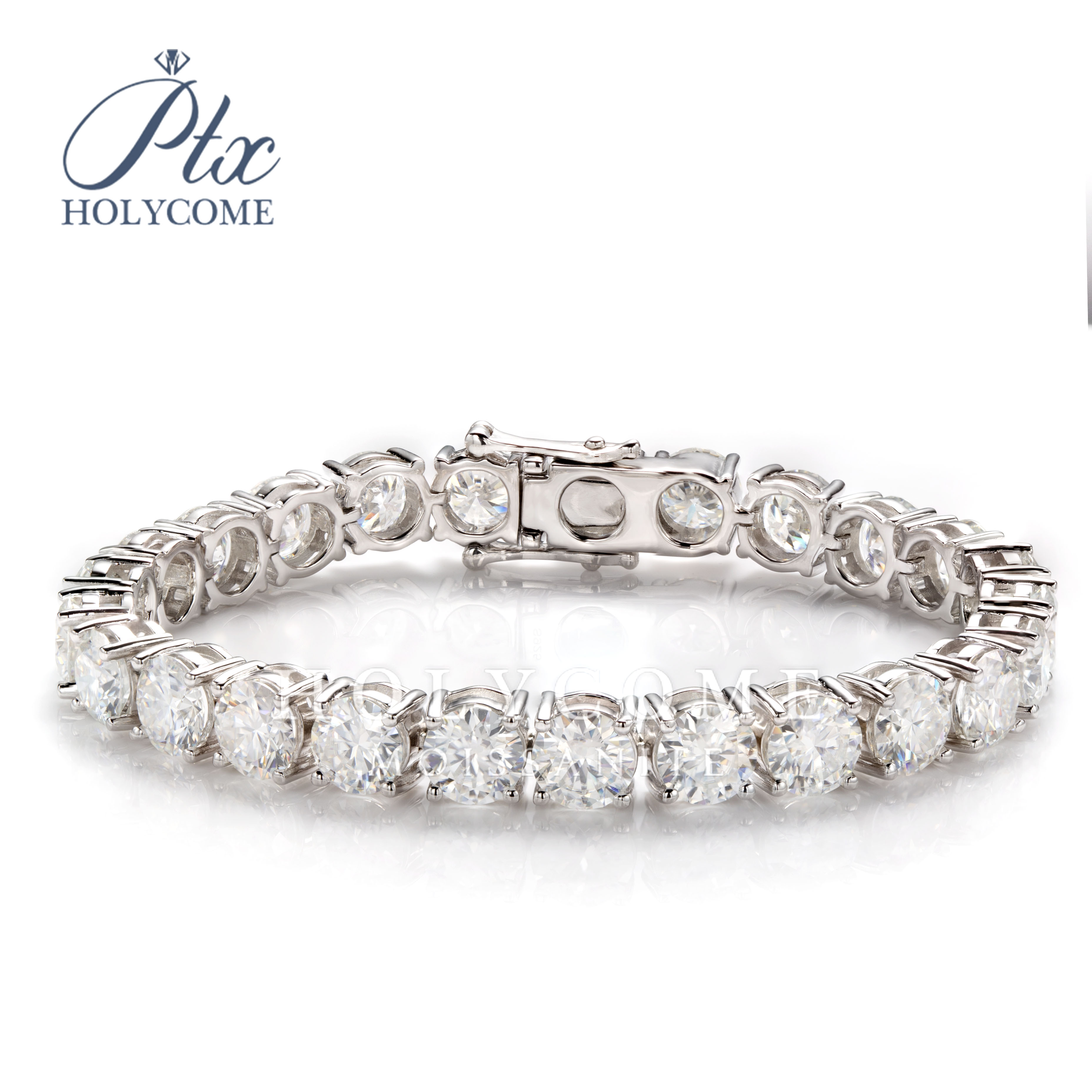
The tennis bracelet is the anchor of the category. A continuous line of individually set moissanite stones, usually round, linked by a flexible chain, reads as luxury at a fraction of the equivalent diamond piece. For wholesale buyers, the key spec is total carat equivalent and stone size. A common retail seller runs between 3 and 5 carat total weight, with stones around 2 to 2.5 millimeters each. Below that, the piece looks dainty. Above that, it becomes a statement piece that moves more slowly.
Build quality matters far more than the headline stone weight. Look for a secure double-latch box clasp, a safety figure-eight, and uniform stone sizing along the line. A tennis bracelet that loses a stone within a month of purchase generates exactly the warranty claim that erodes your reputation. Our tennis bracelet buying guide covers sizing and fit in detail, but the wholesale rule is simple: order stock primarily in 6.5 and 7 inch lengths, because those fit the broadest range of wrists.
Moissanite bangles and cuffs
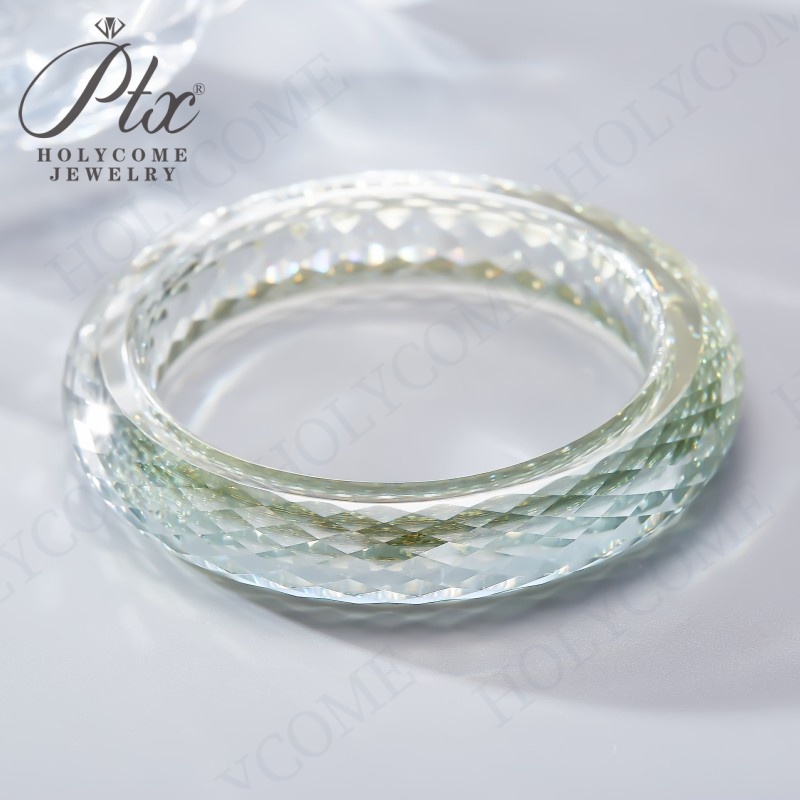
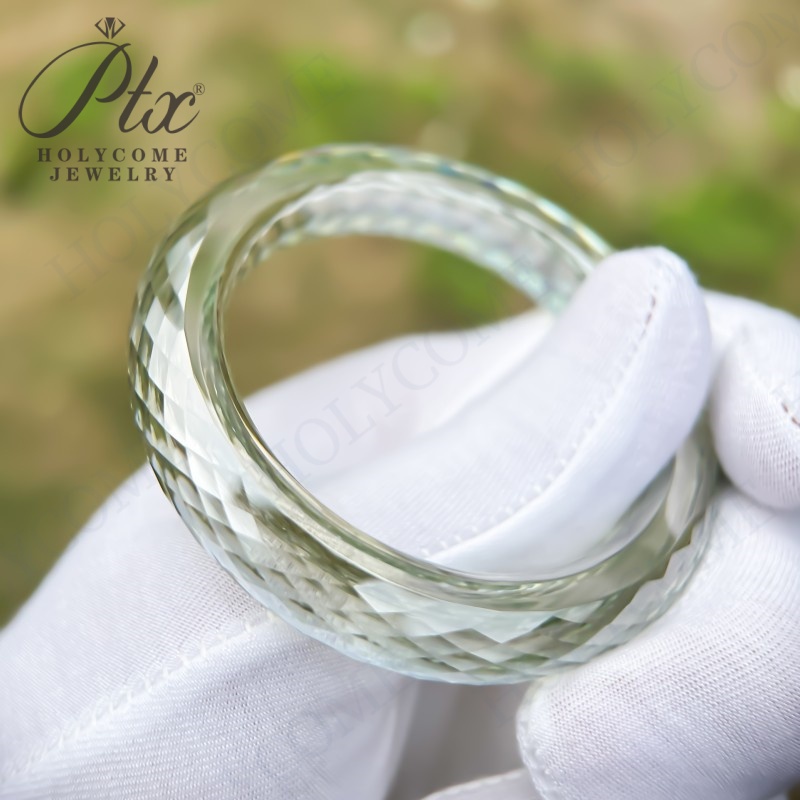
Bangles sit at the dressier end. A hinged or open bangle set with a row or halo of moissanite reads as evening jewelry and pairs naturally with bridal and occasion wear. Bangles sell well in yellow and rose gold because they read warm and traditional, and they stack beautifully with a plain wedding band. Because a bangle is rigid, sizing is less about wrist circumference and more about whether the hand can slip through; most bangles are one-size-fits-most, which makes them easier to stock than finger rings.
The tradeoff with bangles is comfort. A bangle that clinks against a desk all day annoys the wearer, so expect a slightly slower sell-through than tennis bracelets. Position bangles as occasion pieces rather than everyday pieces, and photograph them stacked with watches and other bangles so customers see the styling.
Station and by-the-yard styles
Station bracelets place single moissanite stones at intervals along a delicate chain, rather than in a continuous line. This is the most affordable entry point and the most layered-friendly. A station bracelet in 18k gold over a thin chain is the kind of piece a customer buys for herself on a Tuesday, then comes back to add a matching necklace and earrings. If you already sell station by-the-yard necklaces, the bracelet is the obvious cross-sell.
Station styles also tolerate irregularity better than tennis bracelets. A slightly off-center stone is unnoticeable on a spaced chain but glaring on a continuous line. That makes station bracelets a forgiving category for a new buyer testing a vendor's workmanship.
Metal, size, and margin notes
Stock white gold for the bridal and everyday customer, rose gold for the romantic and feminine buyer, and yellow gold for the heirloom and vintage-influenced shopper. Do not over-order platinum for bracelets; the weight and cost rarely justify the sell-through outside a few luxury clients. For sizing, the tennis bracelet rule of thumb is roughly one finger of slack between the bracelet and the wrist. Too tight and it binds; too loose and it flips stones against the wrist.
Margin on bracelets tends to be healthy because customers compare them to diamond tennis bracelets priced several times higher. A moissanite tennis bracelet that retails at a few hundred dollars sits against a diamond alternative at several thousand, which makes the value story easy to tell. Just make sure your supplier grades and discloses the stones consistently so you can explain the grade with confidence, as we cover in D-color VVS moissanite grading.
Building your bracelet plan
Start small: two or three tennis bracelets in mixed metals, one or two bangles for occasion wear, and a handful of station pieces for self-purchase. Watch which length and which metal reorders. Bracelets are a category that rewards restraint at launch and expansion once you see your local sell-through. A modest, curated assortment outsells a crowded case every time.
Carat weight conventions cited here follow the Wikipedia entry on carat weight.
Related reading: Wholesale Moissanite Bracelets: Tennis, Stackable and Charm Styles Tha, Stocking Moissanite Tennis Bracelets: A Wholesale Buyer's Guide, Wholesale Moissanite Tennis Bracelets: Width, Clasp and Sizing That Se.
Frequently Asked Questions
Is moissanite a good diamond alternative for retail buyers?
Yes for price-sensitive customers who want brilliance and hardness. Moissanite ranks 9.25 on the Mohs scale, holds up to daily wear and costs a fraction of a natural diamond of the same size, so it resells fast in bridal and fashion lines.
What is the minimum order for wholesale moissanite?
MOQ starts at 50 pieces per design for stock items. Custom cuts and private-label settings usually start at 100–300 pieces depending on the mold.
Do you provide certificates with moissanite stones?
Yes. Every parcel ships with GRA or IGI documentation listing carat weight, color grade and cut. We recommend passing the certificate to your end customer for trust.
How long does sample and bulk production take?
Samples ship in 3–5 days. Bulk runs take 15–20 days under 500 pieces, and 25–30 days for custom work.