A customer in Lyon brought a moissanite solitaire into a local jeweler last spring, certificate (per GIA's diamond grading standards) in hand. The paper said "D color, VVS clarity, excellent cut." The jeweler looked at the stone under a loupe, turned to her and said: "This is an F to G stone, and the clarity is VS at best." The certificate was not forged - it was just printed to a loose standard. This is the gap retailers deal with daily: moissanite certificates exist, but what they guarantee varies by issuer. Below is a line-by-line read of what the paper actually shows.
Unlike diamond grading, which GIA and IGI standardize with trained gemologists, moissanite grading is done in-house at the factory or by third-party bodies. IGI's lab-grown diamond grading process is the gold-standard reference; moissanite papers borrow the format but not the independent rigor. Knowing what to trust is part of the buyer's job.
Carat and dimensions
The first block lists weight (often as a size in millimeters rather than carat, since moissanite is sold by mm), table percent, depth percent, and crown/pavilion angles. This is the most reliable part of the paper - numbers are numbers. Cross-check the mm against a caliper on arrival. A 6.5mm round that measures 6.7mm is cut thin. Read the size side in loose stone pricing by size.
Color grade
Color on moissanite is graded on a D-to-Z scale borrowed from diamonds, with D-F called "colorless," G-I "near colorless," and below that "faint tint." The catch: moissanite's natural gray-green undertone means a "D" on one factory may read as "E-F" on another. Tolerance of one grade between factories is normal. Read the detail in what D-to-F means on the bench and batch-to-batch grade drift.
Clarity and cut grade
Clarity on moissanite is usually eye-clean to VVS; most commercial stock lands VS-VVS. Cut grade ("excellent," "very good") is less standardized than color. Treat "excellent cut" as a marketing label unless the angles match the diamond ideal-cut benchmarks. For the structural comparison, see what the certificate actually shows and SGS versus GRA.
What the certificate does NOT show
It does not prove origin, does not test treatment history beyond standard production, and does not replace a visual inspection. A certificate is a reference, not a guarantee. Pair every bulk order with a sample check under your own loupe. The paper also will not tell you how the stone will look under your store lighting - that is a bench question, not a paperwork question. If a customer asks "is this GIA certified?" the honest answer is that GIA does not grade moissanite, and the paper you are showing is a commercial grading reference.
How to verify a certificate online
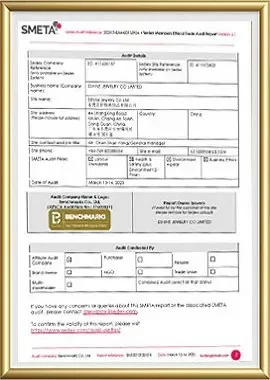
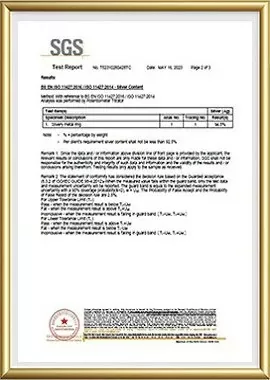
Most GRA and SGS-style certificates have a QR code or a serial number field that resolves on the issuer's website. Test it before you ship the piece to a customer. A valid verification page shows the same stone shape, mm size and color grade as the paper you are holding. If the page does not resolve, shows a different stone, or demands a password, treat the paper as decorative. Some low-end suppliers print certificates on an inkjet with a serial number they never registered - catching this on the way in prevents a customer from catching it on the way out.
FAQ: moissanite grading and certificates
Is a GRA certificate as good as a GIA one?
No. GRA is a commercial grading body common in the China moissanite trade; GIA does not grade moissanite. Treat GRA/SGS papers as factory-backed references, not independent gemological reports.
Can I trust the color grade on the certificate?
Within about one grade. Expect a "D" stone to read D-F depending on lighting. If you need true D consistency, ask for batch-selected stock and inspect a sample first.
Does every moissanite ship with a certificate?
Retail-facing solitaires usually do. Melee and side stones often ship with batch certificates rather than individual papers. Confirm what ships before ordering.
What should I do if the stone does not match the paper?
Photograph both, measure the stone, and open a claim with the supplier. A reliable factory will replace or credit stones that drift more than one grade from the paper.
Know what you are buying before you quote it to a customer. HOLYCOME ships each stone with a verifiable certificate and offers batch-grade consistency checks before shipment, so the paper in your customer's hand matches the stone in the case, order after order, year after year, batch after batch. We also provide a one-page plain-English translation sheet you can hand to customers who ask "what does VVS actually mean?" - this turns a paperwork question into a trust moment and reduces post-sale confusion and returns. Request a certificate sample and compare it against your current supplier.
Frequently Asked Questions
Is moissanite a good diamond alternative for retail buyers?
Yes for price-sensitive customers who want brilliance and hardness. Moissanite ranks 9.25 on the Mohs scale, holds up to daily wear and costs a fraction of a natural diamond of the same size, so it resells fast in bridal and fashion lines.
What is the minimum order for wholesale moissanite?
MOQ starts at 50 pieces per design for stock items. Custom cuts and private-label settings usually start at 100–300 pieces depending on the mold.
Do you provide certificates with moissanite stones?
Yes. Every parcel ships with GRA or IGI documentation listing carat weight, color grade and cut. We recommend passing the certificate to your end customer for trust.
How long does sample and bulk production take?
Samples ship in 3–5 days. Bulk runs take 15–20 days under 500 pieces, and 25–30 days for custom work.